


Tomorrow morning, Nov. 26, 2026, the Macy’s Thanksgiving Day Parade rolls for the 100th time. That is not the same thing as a 100th birthday. The first parade was in 1924, the 100th anniversary was in 2024, and three years went dark during World War II, which is why the 100th march lands now.
If you’ve only ever watched it half-awake on NBC, with a roll in one hand and somebody arguing about the turkey in the other, it can look like a smooth, sealed tradition: giant balloons, Broadway, Santa at the end, roll credits. It did not start that way. It started with live zoo animals. It once ended by just letting the balloons go. It has been canceled for a war, shrunk to one city block during a pandemic, and, on a windy morning in 1997, it put a spectator in a coma and left cops stabbing a purple dinosaur in the street.
Here’s how it got from there to a record 100 inflatables, and why Thanksgiving morning still has a little chaos left in it.
It started as a Christmas parade, with actual tigers
The first edition stepped off on Nov. 27, 1924, and it was not even called a Thanksgiving parade. It was the Macy’s Christmas Parade, put on by store employees to kick off holiday shopping at the Herald Square flagship. Macy’s official history still describes colleagues, friends and families in costume, floats, bands, and live animals borrowed from the Central Park Zoo. NBC later spelled those animals out as elephants, lions and tigers. The route ran from West 145th Street and Convent Avenue in Harlem all the way down to the store on 34th Street.
Santa has closed the parade almost every year since that first one. In 1924 he climbed the Macy’s marquee, the holiday windows were unveiled, and the New York Times reported he was crowned “King of the Kiddies.” (Macy’s has said Santa sat out the closing slot on only one occasion in the 1930s.) Crowd estimates for that first year bounce around, so we are not going to pretend we have a precise head count. What we do know is it was enough of a hit that Macy’s immediately made it an annual event. By 1927, according to NBC, the name had officially become the Macy’s Thanksgiving Day Parade.
Then they swapped the zoo for Felix the Cat
The live animals did not last. By 1927, Macy’s official history says, the zoo creatures had “lost their Parade marching rights.” In their place, puppeteer and illustrator Tony Sarg — already the brain behind the store’s animated holiday windows — teamed up with the Goodyear Tire and Rubber Company and built something nobody on 34th Street had seen before: giant character balloons.
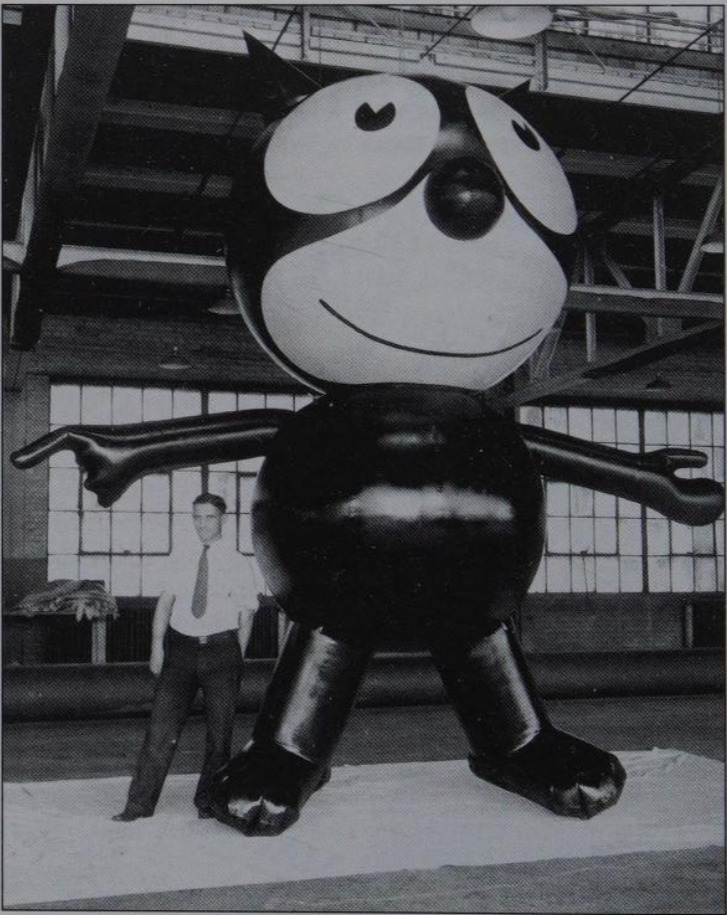
The first of those characters was Felix the Cat, then a genuine silent-era cartoon star. The Smithsonian notes that those first balloons were filled with air, not helium, and held aloft by teams of handlers — “upside-down marionettes,” in the way Sarg thought about them. Helium arrived in 1928, which is when the balloons actually started to fly, and when Macy’s got a spectacularly 1920s idea: when the parade was over, they just… let them go.
The released balloons had tags redeemable for cash. Macy’s official history says some years offered rewards of up to $500 for a balloon’s return, a citywide scavenger hunt for a runaway cartoon. The tradition lasted until 1932, when a student pilot’s plane got tangled up with a giant cat balloon, often identified as a Tom Cat or Tom-Kat balloon. The rubberized fabric wrapped around a wing, the plane went into a tailspin, and her instructor pulled it out close to the rooftops. TIME covered the scare under the headline “Girl v. Tomcat.” Macy’s stopped releasing the balloons after that.
One earlier balloon never came back at all: a blue hippopotamus, released after the 1931 parade and lost. A reconstructed Blue Hippopotamus is in this year’s official 2026 lineup, which is a very Macy’s way of closing a 95-year loop.
The war years, then television takes over
The parade was canceled from 1942 through 1944 because rubber and helium were needed for the war effort. That three-year gap is the only reason 2026 is the 100th parade instead of 2024. The New York Times reported the send-off in November 1942: Mayor Fiorello LaGuardia, dressed as St. George, symbolically stabbed a 60-foot dragon balloon so it could go into the rubber scrap drive.
The parade came back in 1945. Two years later, Miracle on 34th Street turned it into a national myth, complete with footage from the 1946 march. Television followed in fits and starts. The first telecast was a local New York experiment on NBC in 1939. After the war it reached a national audience, first on CBS in the late 1940s — Macy’s dates that to 1947, other histories say 1948 — and NBC has been the official broadcaster since 1953. The Radio City Rockettes have been in the mix since 1957. Broadway’s official foothold, per Macy’s, starts in 1980, when the cast of Barnum performed, and that 34th Street musical slot has been part of the morning ever since.
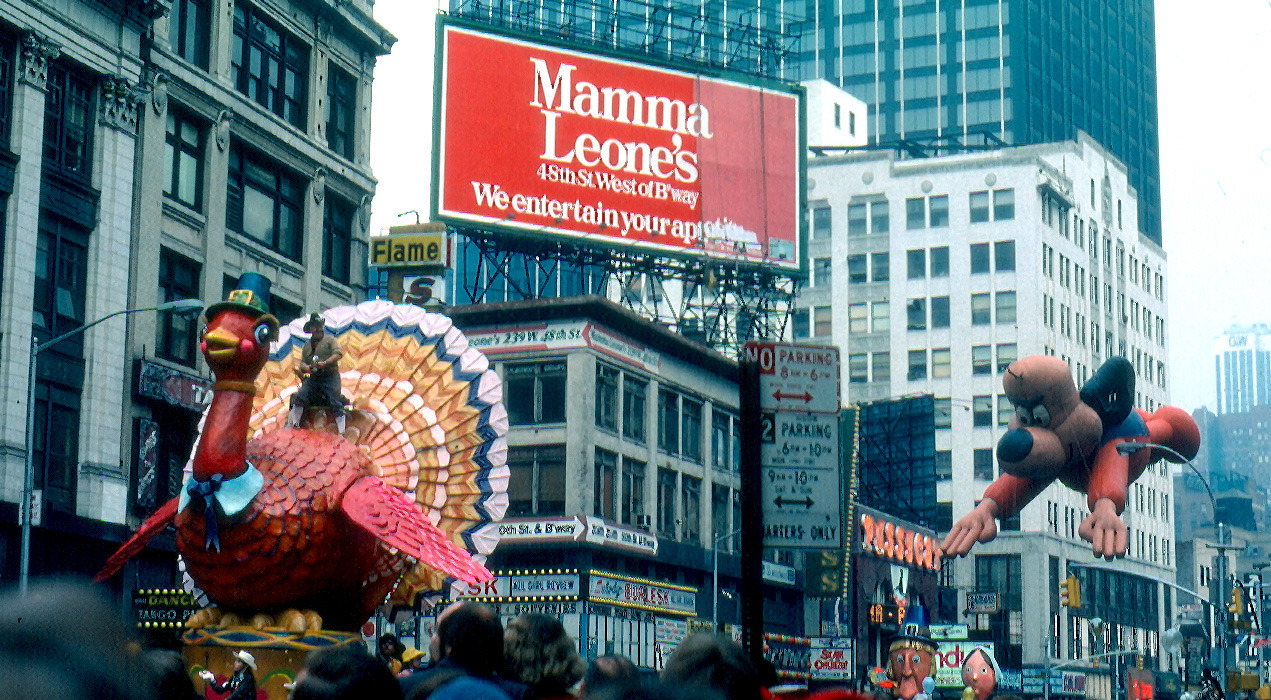
The 1985 He-Man float really did stage a battle
If you were a kid in 1985, or you are one of those adults who can still hear “By the power of Grayskull” without warning, this is the one that lives in your head as a fever dream: a Masters of the Universe float that did not just roll down the street and wave. It tried to stage a fight.
Here is what can actually be confirmed. In the 1985 parade, Mattel had an elaborate float promoting He-Man and the Masters of the Universe and She-Ra: Princess of Power. Contemporary write-ups and a surviving clip from the NBC telecast — later posted by the site Dinosaur Dracula, and still live on YouTube — show a three-part set: Castle Grayskull, a giant serpent standing in for Snake Mountain, and the Crystal Castle. Costumed performers as He-Man, She-Ra, Skeletor, Orko and other characters from both shows move across the float, swinging props and acting out a battle, with a “By the power of Grayskull” soundbite from the cartoon mixed in. Host Pat Sajak introduces the whole thing on the telecast, including a brief explainer of Eternia that sounds like a man reading a brief he was handed about 90 seconds earlier.
That is the float. It was real, it was 1985, and the battle sequence is on video, not parade folklore. One later recap says the float also appeared a second year, in 1986. I could not independently confirm that 1986 return from a primary or news source, so we are not treating it as settled. What we have, solidly, is 1985, and it is still one of the most unhinged things a toy company has ever parked on 34th Street.
Snoopy has been flying longer than almost anybody
Plenty of characters have come and gone. Snoopy has basically moved in. Macy’s official history dates his first flight to 1968, as the World War I Flying Ace. Since then, the beagle “has appeared in over 40 parades as various balloon characters,” which is the official wording, and NBC has called him the longest-running flying character balloon in the parade’s history. We are not going to invent a more precise appearance count than Macy’s is willing to give.
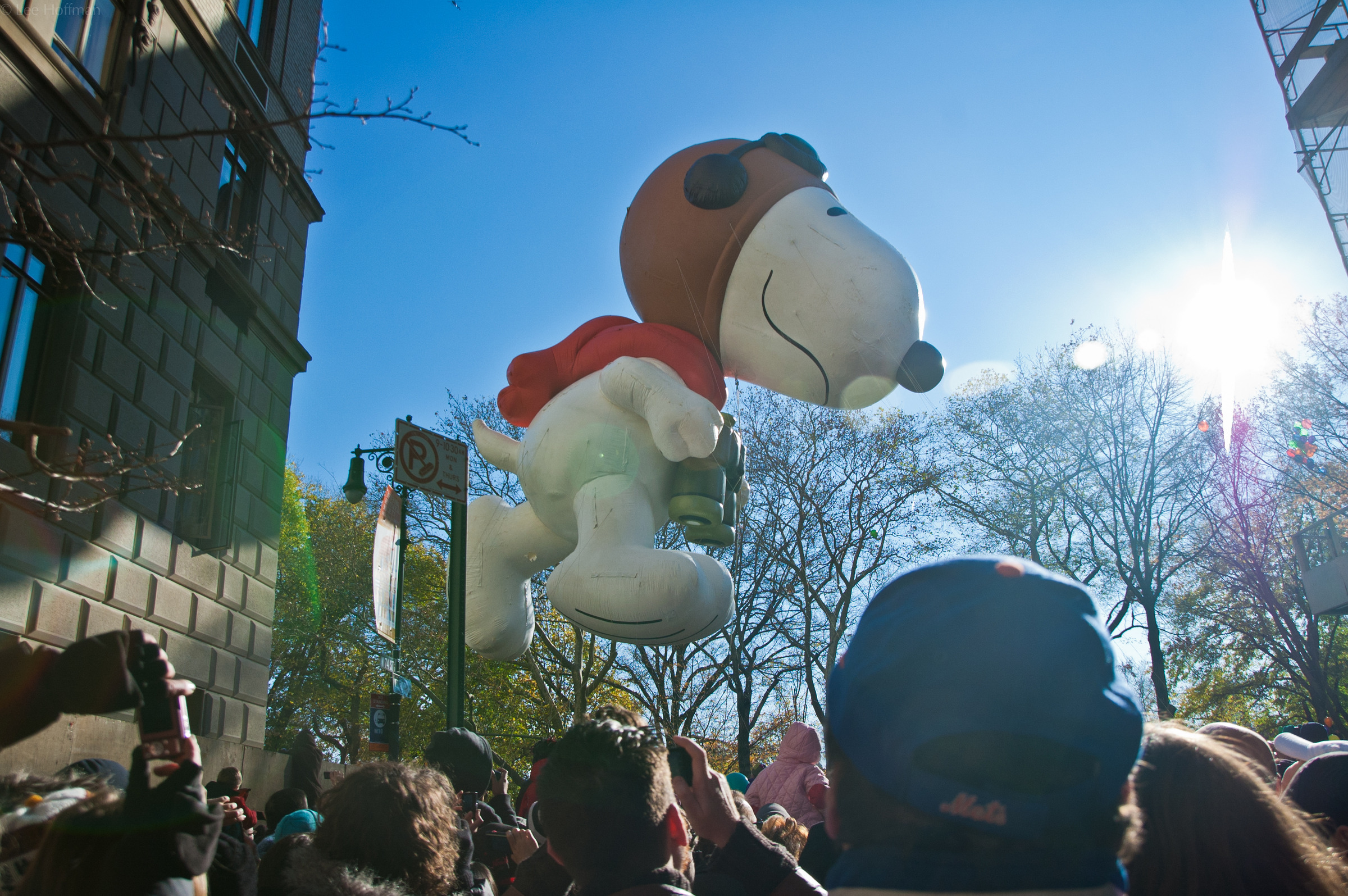
For the 100th parade, Snoopy is back again, this time in his ninth distinct balloon, as Joe Cool with Woodstock. If you are keeping score at home, the beagle has now outlasted the animals, the balloon-release era, black-and-white TV, and at least one purple dinosaur.
The year the balloons fought the city, and the city fought back
The balloons are the reason people get up early. They are also the reason the parade has a rap sheet.
In 1991, the Kermit the Frog balloon hit a tree on Central Park West and deflated on the left side of its head. The Hollywood Reporter notes that Kermit kept going anyway, with commentators observing that he looked “just a little bit sad,” and that the balloon did not return until 2002.
In 1993, the Sonic the Hedgehog balloon — in its parade debut — hit a lamppost at Columbus Circle. The post came down and injured a child and an off-duty police officer, ABC 7 New York reported, and the balloon was pulled from the route.
Then came Nov. 27, 1997, which is the morning people mean when they say Barney “exploded.” That is not exactly what happened, and the real story is worse in one direction and funnier in another.
The New York Times reported that winds that day gusted as high as 43 miles an hour. Officials had talked about pulling the balloons and decided to keep them in, thinking the wind was dying down. It was not. At 51st Street, handlers lost control of the Barney the Dinosaur balloon. It struck a lamppost, took a puncture in its side, and the torso deflated as the balloon came down on the people holding the lines. One handler told the Times, “Everything turned purple.” Another said, “Barney attacked us.” NYPD officers swarmed the collapsing balloon and stabbed and stomped it to get the rest of the helium out. Nobody was injured by Barney. That part is the viral one, and you can see why.
The part that should not be a punchline happened the same morning, at 72nd Street and Central Park West. The Cat in the Hat balloon struck a lamppost and knocked the arm of the post into the crowd. Four people were hurt. Two had serious head injuries. One spectator suffered a skull fracture and was in a coma for 24 days. The Pink Panther balloon was also brought down and deflated by police. The Times said perhaps a dozen balloons were damaged overall.
The city did not shrug it off. Mayor Rudy Giuliani appointed a task force, and for the 1998 parade New York issued rules that still govern the balloons today. No large balloon bigger than 78 feet long, 40 feet wide or 70 feet high. No large balloon in the air if sustained winds exceed 23 miles per hour or gusts exceed 34. Balloons were tethered to support vehicles, handlers got tougher training, and lamppost arms along the route were redesigned or temporarily removed. Those wind limits are why, as of Tuesday night, Nov. 24, USA Today was already flagging a coastal storm and a high-wind watch for Thursday, with Macy’s saying the balloon-flight call would be made on parade morning. The only year the full-size balloons were grounded entirely, USA Today notes, was 1971.
The balloons kept finding trouble anyway. In 2013, the Hollywood Reporter notes, the Spider-Man balloon caught a tree near Central Park and ripped open its left arm, then finished the route anyway. Spider-Man is in this year’s lineup too. Some characters are just hard to keep on the ground.
A one-block parade, a Rickroll, and the night-before ritual
Not every famous moment was a crash. In 2008, Cartoon Network put Rick Astley on the Foster’s Home for Imaginary Friends float and, in front of the live NBC audience, Rickrolled the parade. NPR wrote it up at the time. Macy’s official history still lists it, which tells you the company knows a clean hit when it sees one.
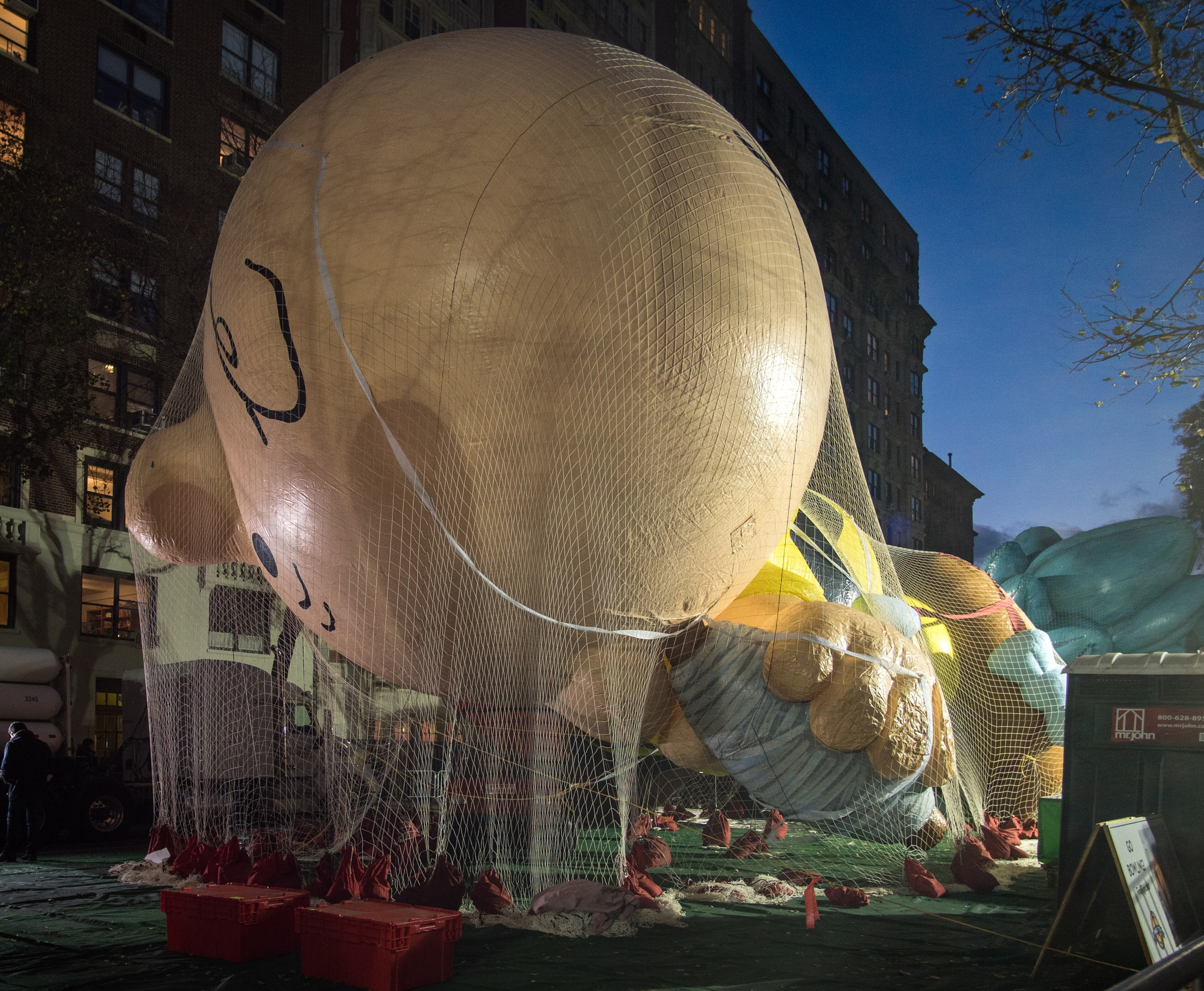
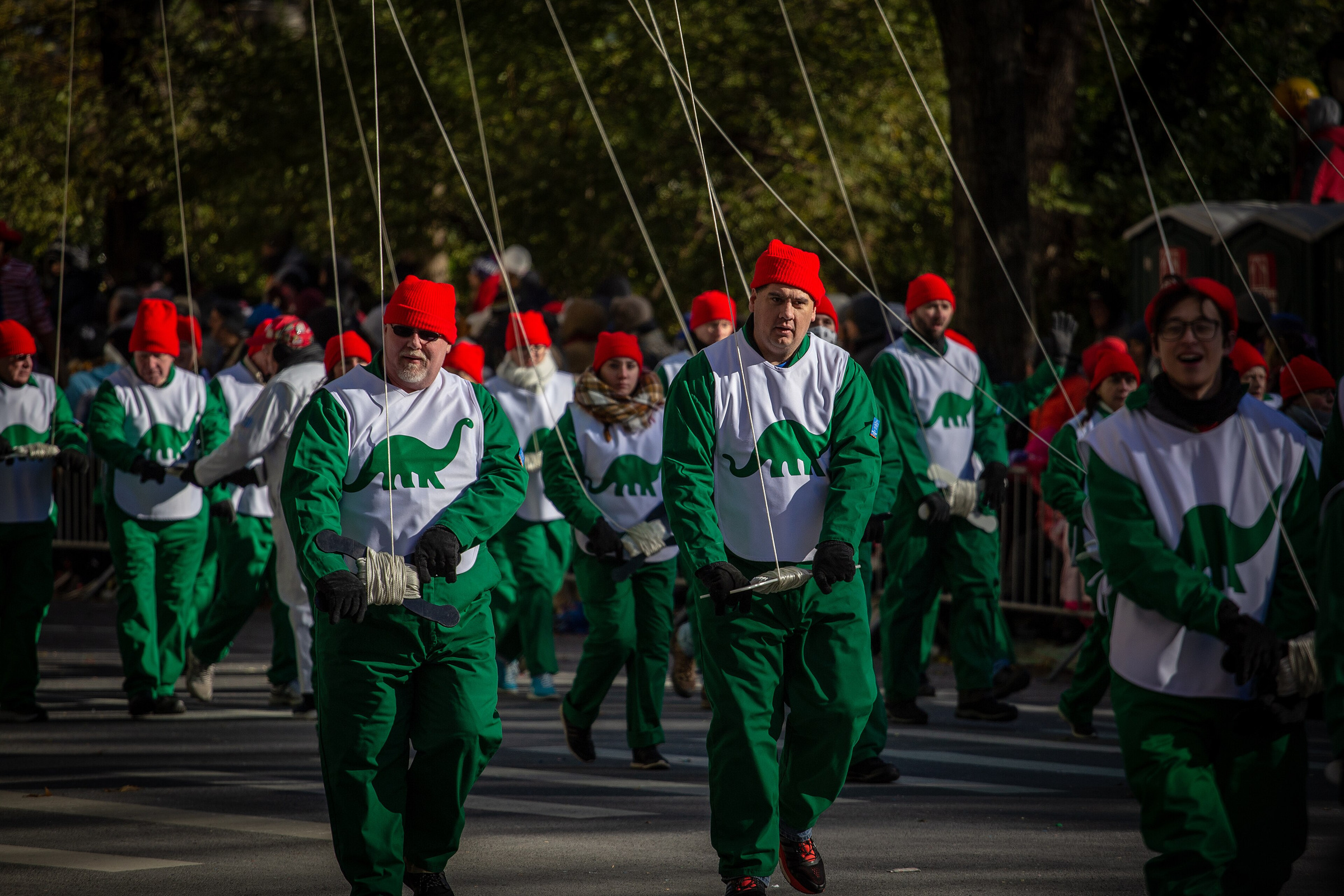
And then there was 2020, when the parade could have disappeared again and didn’t. With the city in the middle of the COVID-19 pandemic, Macy’s and New York staged a television-only version focused on Herald Square. The traditional 2.5-mile route was not used. There were no live sidewalk crowds, no participants under 18, and no public balloon inflation the night before. Macy’s said participation was cut by about 75 percent, split over two days, and the giant balloons were flown from a specially rigged five-vehicle framework instead of the usual 80 to 100 handlers. Macy’s official history later described it as a one-block production with 130 volunteers, filmed in parts over multiple days. In 2021, the full street parade came back.
What’s actually in the 100th parade
Macy’s has spent a year pointing at this one. The official Nov. 13 announcement and the parade lineup page put the 100th march on Thursday, Nov. 26, 2026, with more than 11,000 volunteers and participants and a record-breaking 100 inflatable elements. It airs on NBC and Telemundo from 8:30 a.m. to noon in all time zones, and streams on Peacock.
New balloons and inflatables in the official list include Bluey, Buckaroo Bob the Minion, Earl the Squirrel, Hello Kitty, Joe Cool and Woodstock, Sorcerer’s Apprentice Mickey, Underdog, Billie Brightpaw (a Macy’s Studios original) and a Fuzzyeti balloonicle from Levi’s. Felix the Cat is on the balloon list too, which is the right kind of full-circle booking. So is the reconstructed Blue Hippopotamus. Returning character balloons on the published lineup include Spider-Man, Pikachu and Eevee, SpongeBob SquarePants and Gary, Mario, Goku, Buzz Lightyear, PAC-MAN and Smokey Bear, among others.
New floats include a Macy’s Parade All-Stars unit, packed with characters from past parades (Macy’s lists Angry Birds’ Red, Arthur, Bugs Bunny, Bullwinkle, Curious George, Finn and Jake, Jimmy Neutron, Popeye, Olive Oyl and Swee’Pea, the Pink Panther, Poppy from Trolls, Scooby-Doo, Sonic, the Teenage Mutant Ninja Turtles and Wild Thing), plus Tony Sarg’s Amazing Marionettes, a Hogwarts Holiday float with HBO, and several brand-new sponsor floats. Herald Square performances announced so far include Megan Moroney and Teddy Swims, with a long list of float performers still being added to, including a Dolly Parton tribute led by Megan Hilty. Macy’s said additional talent, including Broadway, would be announced closer to the date.
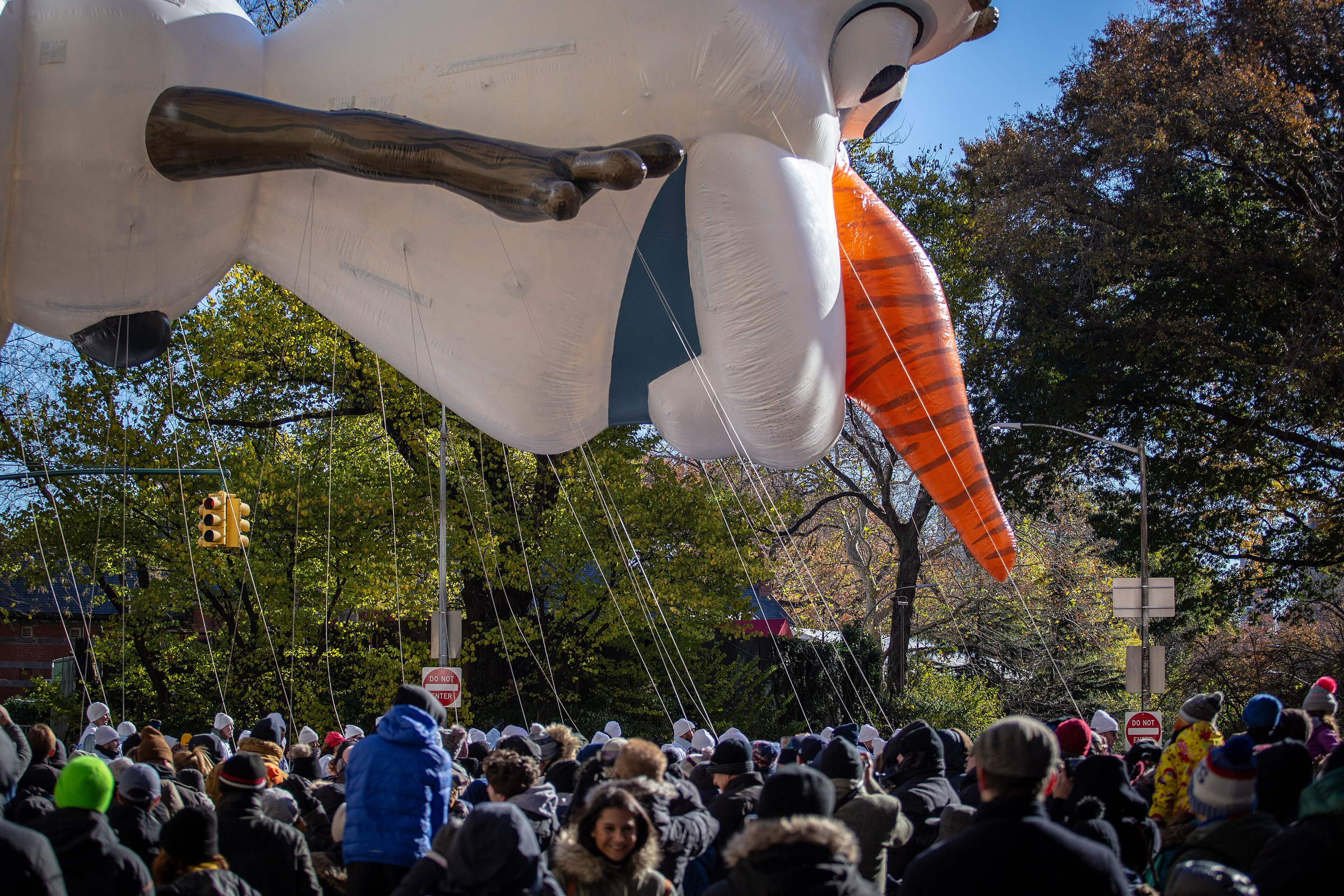
As of this writing, Wednesday, Nov. 25, the balloons are not a sure thing. The city’s wind rules are still the 1998 rules, and Macy’s told USA TODAY on Tuesday that safety comes first and the flight decision happens Thursday morning. The rest of the parade, as usual, is built to go rain or shine.
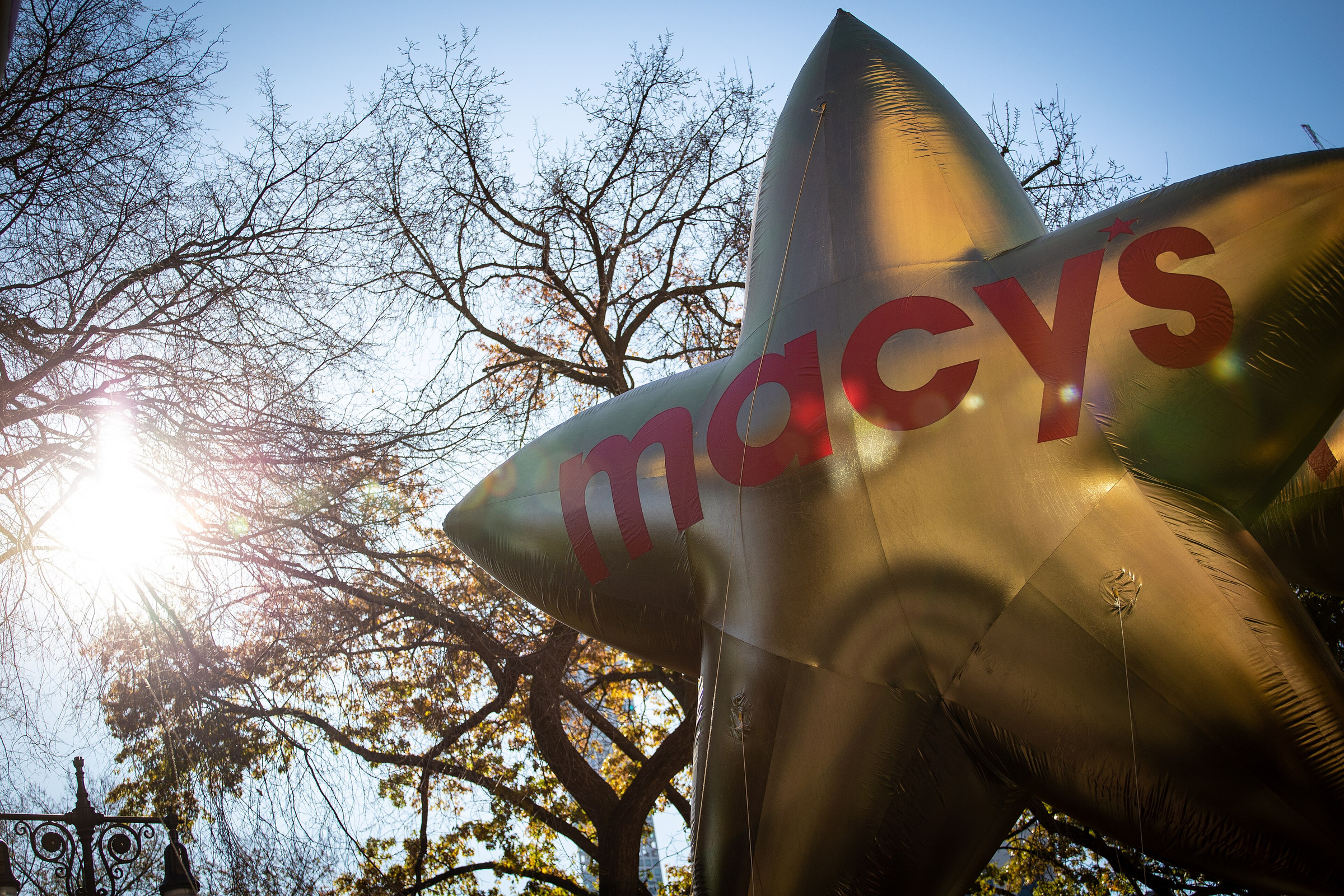
Whatever flies tomorrow, the ending is the same one they landed on in 1924. Santa comes last. The holiday season, officially, starts when that sleigh hits Herald Square. A hundred parades later, that is still the point. Everything else — the tigers, the runaway balloons, the He-Man sword fight, the dinosaur on the pavement — is the long, weird road it took to get back there.

- CONTACT >>